Showing posts with label 2016. Show all posts

18 May 2025

“Castle Hill in Early Light”, 2016

James Brown

“Castle Hill in Early Light”, 2016

Oil with pastel canvas

Size: 30 x 40 cm

My paintings of Castle Hill, the iconic rock formation at the heart of Townsville, Australia, reflect my ongoing engagement with this place. The magnificent rock faces, beautifully catching the light, have been a recurring subject. This small work, like many others in my series, has undergone years of refinement. Though inscribed with the date 2016, I've continually revisited and adjusted it, addressing areas where I felt the composition could be improved. A recent revision involved subtly reducing the intensity of the sky's blue, which I'd previously felt competed with, rather than complemented, the rich colours of the rock face.


05 May 2025

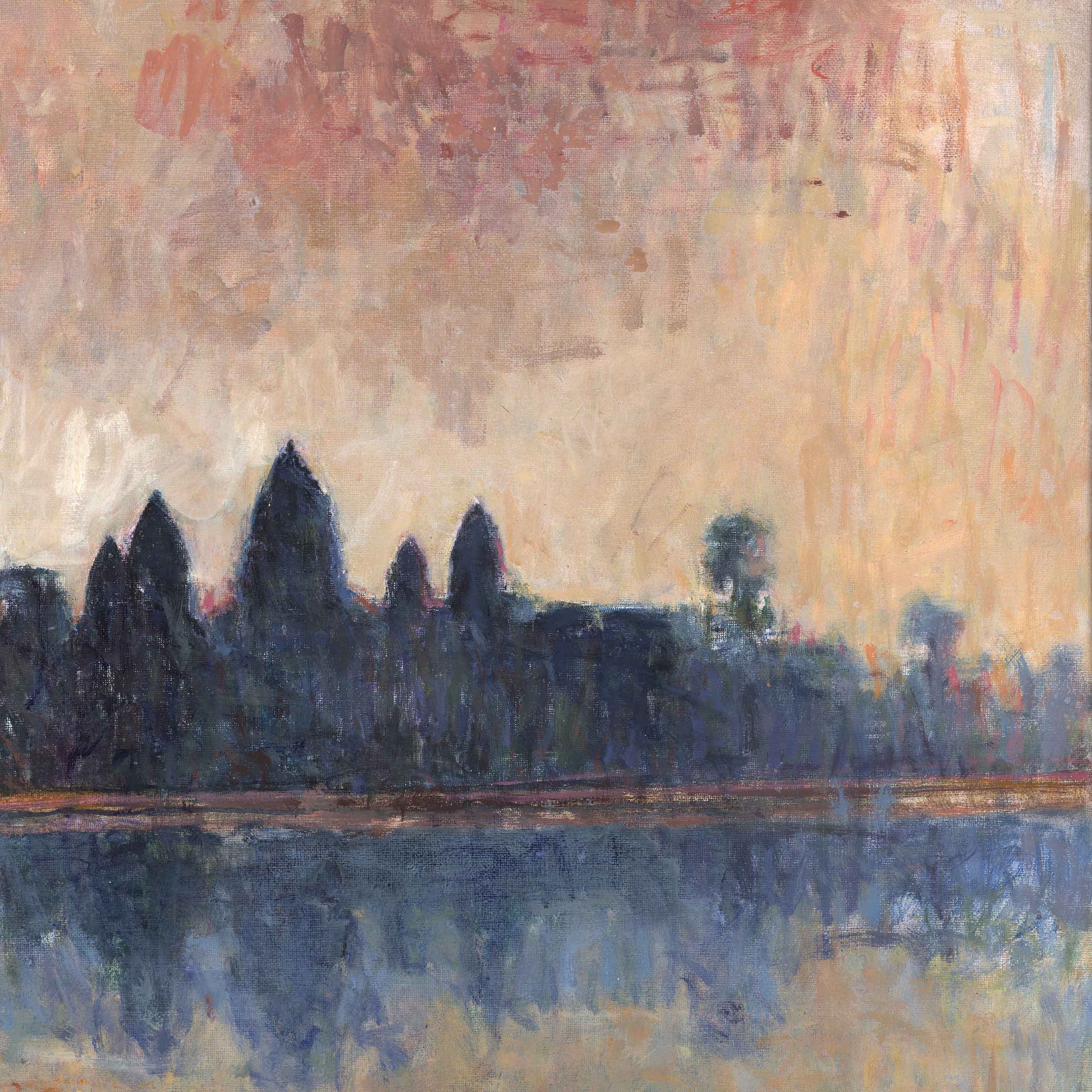
“Angkor Wat”, 2016

James Brown

“Angkor Wat”, 2016

Oil on canvas

Size: 60 x 60 cm

This painting captures the ethereal beauty of a sunset over Angkor Wat. Based on a photograph I took from that unforgettable moment, it evokes the strong impression of the temple complex, silhouetted against the fiery sky, seemingly floating on the moat's reflective surface. The pointed tops of the temples, outlined against the fading light, create a sense of a distant mountain range, further emphasising the magical and almost dreamlike quality of the scene. My goal was to convey the fleeting, almost ephemeral nature of the moment, as if the entire vista were poised on the brink of disappearing.


23 February 2025

Forest Break, 2016

James Brown

“Forest Break”, 2016

Oil on canvas

Size: 60 x 60 cm

I am genuinely pleased with the outcome of this painting. The brushstrokes convey a sense of directness and certainty that I strive for in my work. It's not so much that each mark is meticulously “just right,” but rather that the overall flow of strokes feels authentic and reflects my thoughts and actions during the process.

Take, for example, the central tree; I can almost retrace the hesitations I experienced while painting it. I understood that the tree was far more than just a tall vertical form. It possessed a dynamic quality, with lateral movements in its structure. There are areas where the form of the tree pictorially dissolves into its surroundings, while in other sections, the tree’s form stands out as well-defined.

Another element of this painting that I find particularly satisfying is that a significant portion of the white from the underlying gesso ground is retained. For me, allowing the white underlayer to show through adds a sense of luminosity. Keeping the white ground also helps to showcase each brushstroke, as I believe every mark encapsulates a moment of expression and thought, contributing to the overall narrative of the piece.


14 February 2025

“Ross River Paperbarks”, 2016

James Brown

“Ross River Paperbarks”, 2016

Oil and pastel on canvas

Size: 75 x 75 cm

Isabelle and I begin our mornings with walks along the pathways that edge the Ross River in Townsville—our home in Australia's tropical north. A memorable spot along our route is the line of paperbark trees shown here, leaning slightly outwards over the riverbank. It's a "special" place on the way to a grove of mango trees where a mob of wallabies often gathers.

My memory of these trees is not centred on the trees individually, to my eye, these paperbarks coalesce into a gently curving screen—a tapestry of pale ochre-pink trunks, through which glimpses of the sunlit river shimmer.

This painting captures the experience of looking through that screen. It's about the effect of visual layering—the way the blurred, composite image of the trees interacts with and pictorially frames the glimpsed gaps of water beyond. This visual play with spatial depth is heightened by a deliberate transition in focus from the left side to the right: the trees on the left are rendered more out-of-focus than the two on the right. By intention, this shift in clarity represents the act of walking forward, the trees on the left representing the immediate past, gently fading from view as I move towards the immediate present on the right.

While not initially conceived as an experimental exercise, reflecting on my numerous iterations of this same scene reveals a deep underlying interest. This series, and this painting in particular, seem to be driven by a subconscious desire to capture the experience of “gazing without truly seeing.”